
Warrick County Arrest Records and Court Charges
Warrick County arrest records begin with the law-enforcement event: arrest, custody, booking, agency contact, and jail status when the information is public. The court charge record begins later, when the Warrick County Prosecutor reviews the case and files formal allegations with the court. Those charges become part of the court record through MyCase, the Clerk, and the criminal case docket.
The arrest side and the charge side answer different questions. Custody and booking detail are sheriff or jail information, and the official research found no ordinary browser-accessible county web roster. The Sheriff's Office app advertises current inmates, and jail status can be checked through the jail phone. Court charges after arrest are tracked in the case file, while the full criminal case outcome belongs in the Warrick County criminal court records.
The Warrick County Sheriff department page is a source for arrest-record and jail contact channels.
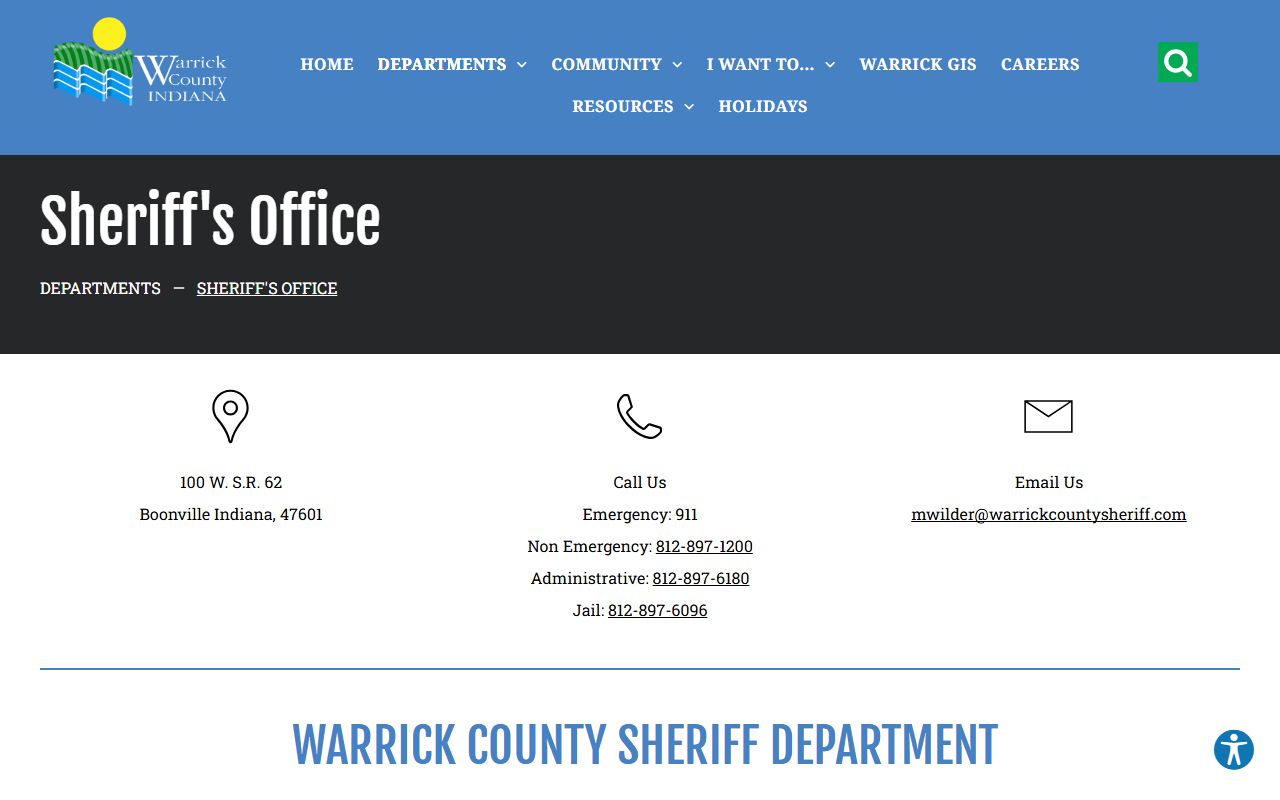
That sheriff source is useful for custody and administrative contacts, but charges still come from the court case.
Find Warrick County Arrest Records
Use two channels for a complete arrest-to-charge search. First, use the Warrick County Sheriff's Office or jail channel for arrest, booking, custody, and release questions. The Sheriff's Office app is the app-forward current-inmate channel documented in the research. Second, use Indiana MyCase for court charges, case numbers, count status, hearings, bond entries, dispositions, and public documents.
- Check the Sheriff's Office app or call the jail for current custody and booking-status questions.
- Open MyCase and search by defendant name, case number, or citation number.
- Filter to Warrick County and the correct local court when those options appear.
- Open the case and read the charge list, statute, offense level, bond, hearing, and docket entries.
- Confirm certified copies, official balances, and non-linked documents through the Clerk of the Courts.
State systems serve different purposes. Indiana SAVIN and VINE support custody search and notification. IDOC handles sentenced state-prison custody, not routine local jail bookings. MyCase handles public court charges. A regulated criminal-history or background-check search is a separate process and should not be treated as the same thing as public MyCase review.
The Warrick Sheriff's Office website is a source for VINE, sheriff services, and jail-related public-safety links.

The sheriff site helps locate custody channels that MyCase does not replace.
Charging Documents After Arrest
After an arrest, law enforcement may submit reports and probable-cause material for prosecutor review. Indiana counties use a Prosecutor, not a District Attorney. In Warrick County, the Prosecutor reviews cases from law-enforcement agencies and decides what formal allegations to file. The charging document turns the arrest event into court charges after arrest and opens the path to hearings, pleas, disposition, and sentencing.
| Complaint | Information | Indictment | |
|---|---|---|---|
| Filed By | Law enforcement or prosecutor depending on procedure | Prosecutor | Grand jury process |
| Common Use | Initial criminal allegation or probable-cause filing | Formal prosecutor-filed charges in many criminal cases | Less common local path for serious matters |
| Record Effect | Starts or supports the case record | Sets the filed counts and offense levels | Creates charges based on grand jury action |
| Where It Appears | Case docket or document link if public | Charge list, CCS, and public documents where available | Court file if used and public |
The Sheriff's Administration page is a source for sheriff administrative services and payment channels that are separate from court charges.
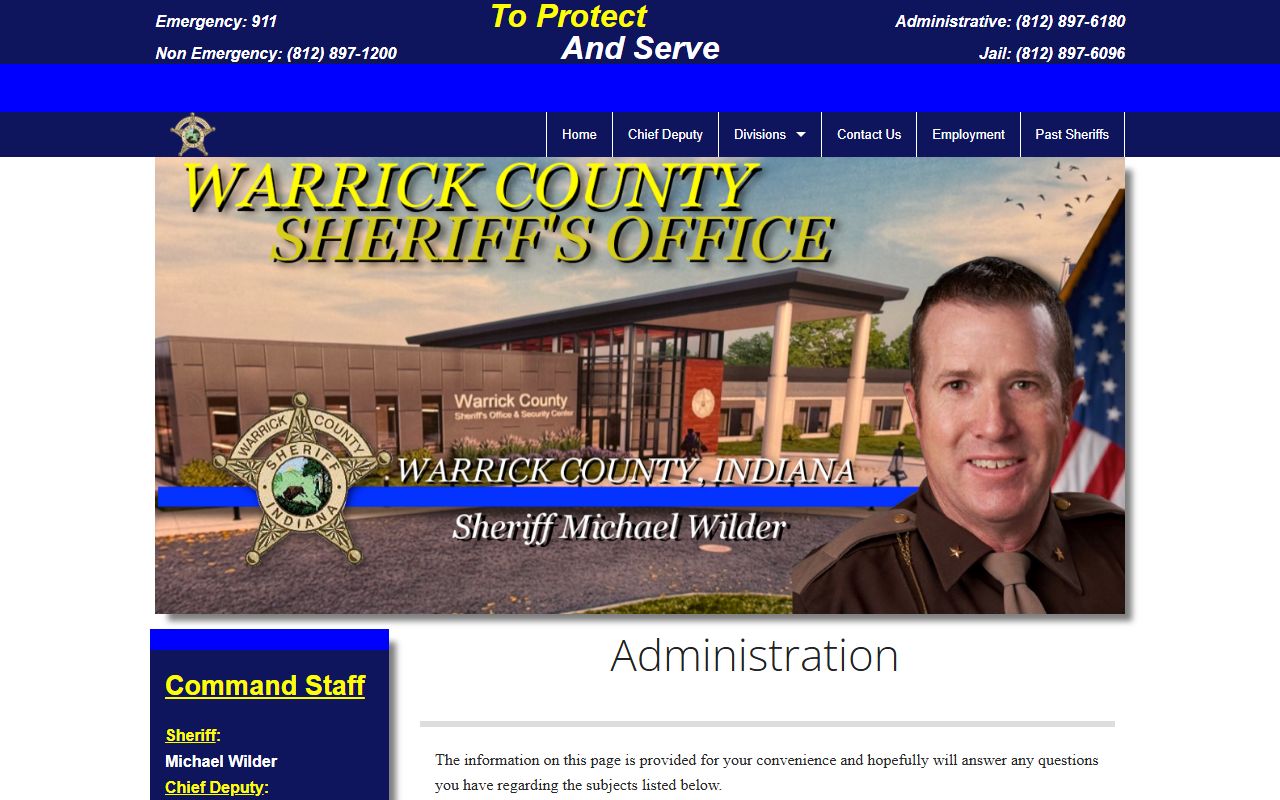
This source helps separate sheriff administrative records from the prosecutor-filed court charge record.
Charge Status and What It Means
Charge status can change throughout a Warrick County case. A filed charge may remain pending, be amended to a different count, be reduced as part of a plea, be dismissed by court order, or be resolved by conviction. The status must be checked count by count because one case can contain several charges with different outcomes.
| Status | What It Means |
|---|---|
| Pending | The charge has been filed and has not yet reached a final outcome. |
| Amended | The prosecutor or court record changed the charge description, statute, level, or count. |
| Reduced | The filed allegation moved to a lower level or lesser offense, often tied to plea negotiations. |
| Dismissed | The court record shows the charge or case was dismissed rather than ending in conviction. |
| Disposed | The count has a recorded outcome, which may or may not be a conviction. |
Note: A dismissed charge can still appear in a public case record unless sealed, expunged, or otherwise restricted.
Charges vs. Convictions
Being charged after arrest is not the same as being convicted. A charge means the prosecutor or charging authority has made a formal allegation in court. A conviction means the case or count ended with guilt by plea, finding, or verdict. Warrick County arrest records and court charges may therefore show allegations that never became convictions.
| Charge | Conviction | |
|---|---|---|
| Stage | Accusation | Verdict or plea |
| Burden of Proof | Probable cause | Beyond reasonable doubt |
| Public Record | Often public if the case is not restricted | Often public unless sealed or expunged |
| Meaning | An accusation has been filed | The court entered guilt or accepted a guilty plea |
| Record Location | Charge list, charging document, CCS, and hearing entries | Disposition, judgment, sentencing, and final order entries |
Sealed vs. Expunged Records
Sealing and expungement can limit public access to arrest records and court charge records. MyCase help says public cases are searchable only if they are not confidential, sealed, or expunged. Indiana Code 35-38-9 governs eligible arrest and conviction expungement. A granted order can change public release, but it does not mean every underlying law-enforcement record is automatically destroyed.
| Sealed | Expunged | |
|---|---|---|
| Visibility | Removed from ordinary public access by rule, statute, or court order | Public access is restricted after a granted Indiana expungement order |
| Record Status | The record exists but is not publicly displayed | Public dissemination changes, while some limited records may remain |
| Eligibility | Depends on court order, rule, and record category | Depends on case type, outcome, timing, and Indiana Code 35-38-9 |
Charge Codes and Severity Levels
Charge records usually tie each count to a statute, description, and offense level. MyCase can show charge descriptions, statute citations, felony, misdemeanor, or infraction levels, offense dates, arresting or issuing agency, plea, disposition, sentence, and financial data when public. One arrest can produce several counts, and each count should be read separately.
A felony, misdemeanor, and infraction do not mean the same thing. A felony is a serious criminal charge. A misdemeanor is a criminal charge at a lower level. An infraction is often traffic-related and may not carry the same criminal-conviction meaning, though it can still create court costs, payment duties, license consequences, and deferral questions. Warrick's Infraction Deferral Program can lead to dismissal after six months of clean record when available at the Prosecutor's discretion.
The county public defender board code section is a source for appointed-counsel structure in eligible criminal and juvenile cases.
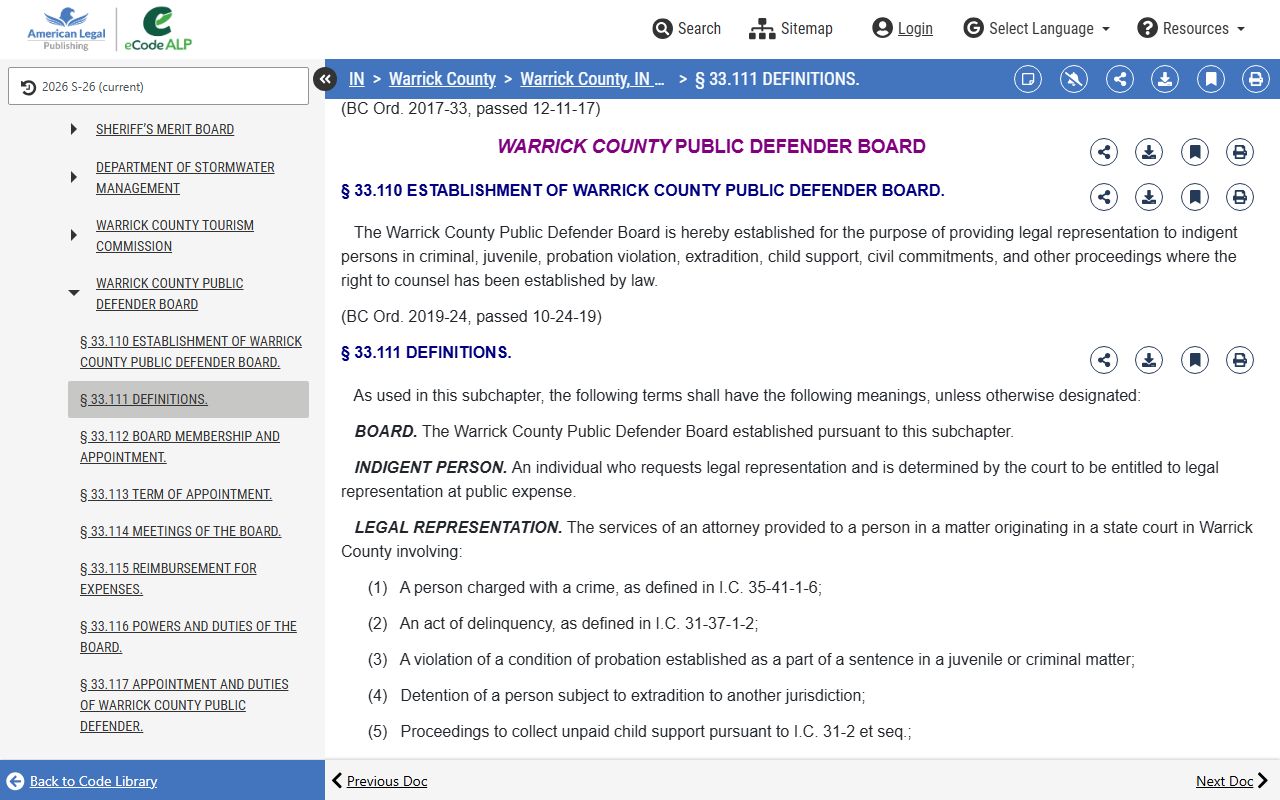
Public defender information matters because early charge hearings can include counsel appointment for eligible defendants.
Statewide Charge and Criminal History Lookups
Statewide tools do not all answer the same question. MyCase is the statewide public court case search for Odyssey courts. Indiana SAVIN and VINE are custody-status and notification channels. IDOC search is for sentenced Indiana Department of Correction custody, not a local booking search. Indiana criminal-history or background-check use may involve separate regulated systems and legal duties.
For Warrick County court charges after arrest, MyCase and the Clerk remain the core case-record channels. For current custody, use the Sheriff's Office app if available or call the jail. For law-enforcement recordings or administrative sheriff records, the research found a PDF request form source URL in the manifest, but its capture failed as a download, so it should be cited as a source only and not displayed as an image.
Background Check Considerations
Public arrest and charge lookup is not the same as a regulated background check. A court charge can be public before final outcome, while a conviction is a later court result. Employment, housing, credit, insurance, and other regulated decisions require lawful background-screening procedures and cannot rely on a casual public-record search alone. Public records may also be incomplete because a case was sealed, expunged, juvenile, confidential, or not online.
Important: Public arrest and charge records do not replace certified records or lawful background screening.
Restricted Charge Records in Warrick County
Restricted charge records include juvenile delinquency matters, sealed cases, granted expungements, protected identifiers, protected-person information, medical or mental-health details, and other materials excluded under Indiana Rule 5 or statute. Juvenile delinquency routes to Warrick Circuit Court, and juvenile files are not treated like ordinary adult public charge records. Protection-order cases also have special online access limits.
Some arrest-side records are sheriff or law-enforcement records rather than court records. Warrick County Code Section 39.08 requires written public-records requests that describe the records with reasonable particularity, but investigatory, sealed, confidential, or court-controlled records may still be withheld or redacted. For charging records, the Clerk and MyCase are the better route once a court case exists.